Thursday, 30 July 2020

Gravity is a very naughty force......

The Theory of Everything | Quantum Mechanics, Gravitation ...
The impossible dream?  

The quantum theory of matter, at the level of fundamental particles and energies, has been very successful in aiding our understanding of basic universal reality. Of course, there are many questions unanswered. Although much has been revealed, there still exists a raft of paradoxes (e.g. 'spooky' action at a distance), inconsistencies (e.g. double slit experiment), and enigmas ('spooky' action at a distance + double slit experiment). These notable conundrums should occupy the mind of humankind for many years to come. It is highly likely that our current conception of 'quantum theory' is but an approximation of reality and that a new or modified model will be required to advance that approximation to a new, refined and exalted status. But for the time being our current understanding of the quantum world will have to do.

Since the conception of quantum theory, it has been the dream of physicists to unify all the four basic forces into one coherent whole. These forces, in no particular/particle order, include: electromagnetism, gravity, and the strong, and weak nuclear force. In 1979 researchers working in the US and UK unified the force of electromagnetism with the weak nuclear force to form the concept of the electroweak force. For this seminal work, the three physicists involved won the Nobel prize. So far the union of the strong nuclear force remains elusive but there are sound theoretical considerations that suggest its integration to form the 'magic trio' is a sound practical proposition. To demonstrate the union experimentally will no doubt involve very high energies and physicists are currently working on this problem with apparent gusto. And when I say 'very high energies' I'm referring to the energies present immediately after the big bang. Gravity, is the weakest of all the forces, much weaker than the nuclear weak force, although it has the property to propagate over vast distances. Although the greatest scientific minds of the last century and this century (consider, Einstein and Hawking) have pondered deep and hard on how gravity might be part of this great quantum unity, however, and unfortunately, there has been little progress, apart from the development of untestable hypotheses.

The heart of the problem lies with the nature of gravity itself and our understanding of it. Until the 17th-century gravity was hardly a concept at all. It required the genius of Isaac Newton to formulate 'Gravitational Laws'. Newton's great insight was to recognise that gravity was a force dependant on mass and the equations he formulated accurately described the real world with uncanny accuracy. The greater the mass the greater the force. This force, derived from mass, decreases with distance according to the inverse square law. With regard to two interacting gravitational bodies, the greater their distance from each other, the less the gravitational attraction will be. Newton considered the force of gravity to extend unto infinity. This is a mathematical construct and gravity is unlikely to reach out that far in reality; as an analogy consider Zeno's paradox. I suspect that, in the real non-mathematical world, gravity has a finite spatial extent. This is a common mistake that folk make. When we look at the solution of a mathematical construct we often assume that it must absolutely relate to our physical reality, absolutely. This is not always the case. This does not mean the mathematics is incorrect, it means that the 'real world' is not always in tune with the underlying/ underpinning mathematics; think about it. 

Although Newton was able to describe the force of gravity mathematically, he was at a loss when it came to describing the force itself. He considered his inability to describe gravitational causality to be one of his greatest failures together with his inability to turn base metals into gold; this dual insanity would vex him until the end of his days. Newton's 'Law of Universal Gravitation' explained the movement of celestial bodies in his 17th-century world extremely well. It wasn't until the 19th century that Newtonian gravity was found to be amiss. New observable phenomena and better scientific techniques and instruments alerted physicists to the uncomfortable fact that 'Great Hallowed Newton' had been wrong. So great was Newton's reputation and intellectual standing, in posterity, that it took a while for physicists to fully comprehend that Newton's gravitational postulations had been in error.

The world, and mayhap the universe, would have to await the genius and serial insights of Einstein in the second decade of the 20th century to provide scientific solace and replacement. Thus, Newtonian gravity was replaced by 'General Relativity'. This did not just represent a change, in theory, it represented a paradigm shift- this is arguably a rare occurrence in science, indeed, especially in the modern world (All hail Einstein). General relativity stated that mass warped space and time. Therefore, space and time would be forever intertwined and dance together according to mass, and not just any old disco beat. Thus, our insight has been confirmed, after all: 'fat lassies' cause greater deformation of the wooden dance floor than their less endowed/empowered sisters- ain't dat the sad truth. Arse, big fat, arse= greater gravity.

General relativity explained anomalies that Newtonian physics could not. In fact, not only was general relativity a sound theoretical postulate, but it was also quickly found to be in accord with numerous practical observations. In the 1930s there was the real and exciting expectation that gravity was about to be integrated into the quantum world to produce a single unified quantum field theory, of everything. This, was the holy grail of physics, after all. The scientist(s) endowed with the intellectual clarity and perspicacity to quantify gravity would surely claim a Nobel prize, or two. But the macro effect of gravity remained steadfast and stubborn (nay, obdurate) and refused to join the quantum world of the very small; O bitter the cud! However, there have been several theoretical attempts to incorporate gravity unto the fold, the most interesting is based on string theory. The problem is that none of these postulations have any practical observational support.     

Physicists are optimistic by nature and love order and harmony in the universe of the very small and very large, so they will continue to seek and search for something which may ultimately prove to be a chimaera, albeit a beautiful delusion (ignis fatuus). Perhaps gravity is the 'rogue' force that cannot be tamed and that seeking unity is an untenable prospect. If only time will tell- but ultimately the telling of the time will depend on gravity.


Folks may have noticed that my posts have become rather sensible of late: blame it on the medication. It is certainly not due to the sunshine or the boogie. What would my readers like to see? I'm happy to knock out content on a variety of topics, within my ken, including, maths, physics, biology, history, theology, military stuff, and of course cosmology. Just let me know in the comments.  

Thursday, 16 July 2020

Early Greek Philosophy


Thales of Miletus – Greatest Greeks
Behold an originator of scientific thought
                                     
It might appear that Greek philosophy and intellectual endeavour appeared out of nowhere, in the 6th century BC without an evolutionary past. It seems to have burst on the intellectual stage of man without precursors. How could this be possible? Well, of course, it is not credible or possible. In fact what we consider Greek philosophy did not originate in Greece at all but with the Greek diaspora states of Asia Minor. Here thoughtful Greeks were exposed to the ancient 'wisdom' of the East and Egypt. Most of this so-called wisdom was complete bollocks full of mysticism and esoteric god lore. Perhaps, this reliance on divinity driven doctrine spurred the Greeks to seek rational causes for the complex tableau of existence. The exact details will be forever lost in the dust/mists of time and frankly, we will never know what really spurred the inception of original and exacting thought.

Philosophy begins with Thales in the late 6th century BC. We have a date of 585 BC when Thales predicted a solar eclipse. On that day, two and half thousand years ago we can confidently state that this day represented the birth of philosophy and science.

Thales was a native of Miletus in Asia Minor. His philosophy was crude, but it was a start. Thales pontificated that everything is water. This is not correct, as certain things or stuff are decidedly not composed of water. However, his thoughts were based on empirical observation and not mysticism and therefore his musings have the right to be called a scientific hypothesis. We know little of Thales, or his thought processes, as what we know is exclusively based on the writings of Aristotle.

The second Milesian philosopher of note is Anaximander. I would warrant that Anaximander is more intellectually interesting than Thales. We know that Anaximander was 64 in 546 BC and it is certain that he did not adhere to Thale's principle: 'that all is water'. He actually came up with a formal proof to show that everything was not derived from water. I will not consider his reasoning here- I suspect you wouldn't find his analysis convincing.  Instead of water, he argued that everything is derived from a primal substance that becomes transformed to become other substances and that when combined they constitute different forms of matter. He understood that all matter consists of a compound of this transmuted primal substance and that these new substances were in a continual struggle for ascendance. However, no one transformed substance prevails, as 'natural law' (whatever that might be) kept all these substances in check, and thus a form of homeostasis ultimately prevails. In this hypothetical universe, the primal substance always remains neutral within the context of continual cosmic flux. He also stated that all life was derived from moisture and all animals, including man, were descended from fishes. What a fascinating hypothesis and mostly correct!

Clearly, Anaximander's ideas and analysis are more sophisticated than Thale's ruminations. He is full of scientific wonder and curiosity and where he is original he is rationalistic.

Anaximenes represents the last of the Milesian trio of philosophers and walked the earth prior to 494BC as in this year the city was destroyed by those pesky Persians. Anaximenes thought that the fundamental substance is air. Thus, the soul is made of air and fire consists of rarefied air. If air is condensed it turns into stone. Different things, therefore, are based on the degree of condensation of air. He considered that the earth to be shaped like a round table, without the legs, of course. Why he came up with this peculiar geometry we have no idea at all. The Milasian school remains important not for what it achieved but for what it attempted.

The coming of the Persians represents the end of Milesian philosophy. The torch would be picked up from the remnants of the burning city and retained by the mainland Greeks, mainly Athenians, and thus the bright flame of the torch would bring intellectual light where before there was nothing but darkness.

We should not be tempted to fall into the trap of intellectual hubris

To our scientific mind and technological grandeur, the musings of these first philosophers can appear to our sophisticated souls as trite, banal, and insignificant. However, we should not revert to smug intellectual elitism- this should be reserved for the commonly placed dullard in our own society, of which there is a multitude. We must relinquish our modern mindset and reflect upon the case that our modern society and learning is based upon the accrued and acquired wisdom of millennia. We should stoop, intellectually, to consider the world view of men who did not have the benefit of this long, although intermittent, march of learning and knowledge. These first philosophers were true intrepid pioneers in an unknown landscape. Although their progress was slight if at all, they set the scene for greater things. If anything, they introduced a new way of thinking about our world which would enrich and inspire the great intellects to come. Therefore, in my opinion, the groundwork of these early thinkers provided, to those that followed, a rich and fertile environment necessary for the continuance of intellectual progress. It is to be remembered that even the great Aristotle, who in the 4th century BC, pontificated widely and in-depth on numerous topics contributed little to the base of true knowledge. Indeed, it has been subsequently shown that he was in error on almost everything. His only contribution to true knowledge is the development of the syllogism and this was just the foundation of logic which would be much improved and developed in subsequent centuries. However, this does not detract from his intellectual greatness. In my opinion, Aristotle remains one of the greatest intellects to have lived, up there with Pythagoras, Archimedes, Newton, Leibniz, and Einstein.

Perhaps the greatest contribution to human thought provided by early rational thinkers was their willingness to consider non-mystical/mythical explanations and elements for causal processes of the material world. In this, they should be highly praised in an ancient world view full of demons and gods. A world which considered the hail of storms the province and causality of fickle deities. Their original thought proved a successful antidote to intellectually impoverished, ancient, mysticism. And for this reason alone, we should be eternally grateful.


antidote to mysticism

Thursday, 9 July 2020

Machiavelli and the Prince

How Machiavellian was Machiavelli? - Paul Meany - Medium
Behold the Man


I think most folk have heard of the word, Machiavellian and perhaps have a vague understanding of what this means in terms of unbridled unscrupulousness especially in relation to political power. But what of the man?

Niccolo Machiavelli was born in 1469, in Renaissance Florence, during a particularly violent and politically turbulent period in the city state's history. He was born in a comfortable middle-class family and in adulthood became an important diplomat representing Florence's political affairs during an ongoing period of upheaval. This was a time when Italy was a mosaic of patchwork states and nationhood was but a dream. Outside nations exercised their international aspirations and exploited Italy's disunity with wanton abandon (nothing changes). Thus, Italy became embroiled in the machinations of the great powers of the day: France, Spain, and the Holy Roman Empire. It was in the interest of these nations to keep Italy divided and therefore weak.

In 1513, Machiavelli pissed off the latest Florentine usurper and after a bit of agonising torture, which denied his humerus of socket adhesion, he was exiled to his country farm south of the city. It is during his time as a 'gentleman farmer', and until his death in 1527, that he produced his most profound political writings. Although all the good stuff was only published after his death. It is fair to say that the death of Machiavelli in 1527 marked the end of the Italian High Renaissance. 

During his life, Machiavelli wrote on a variety of subjects and became a noted playwright. The work that he is mostly remembered for today and earned him notoriety even in his own time, even though the work was published posthumously, was a political treatise called 'The Prince'. The thrust of the work was concerned with advice, ostensively given, to a hypothetical ruler.

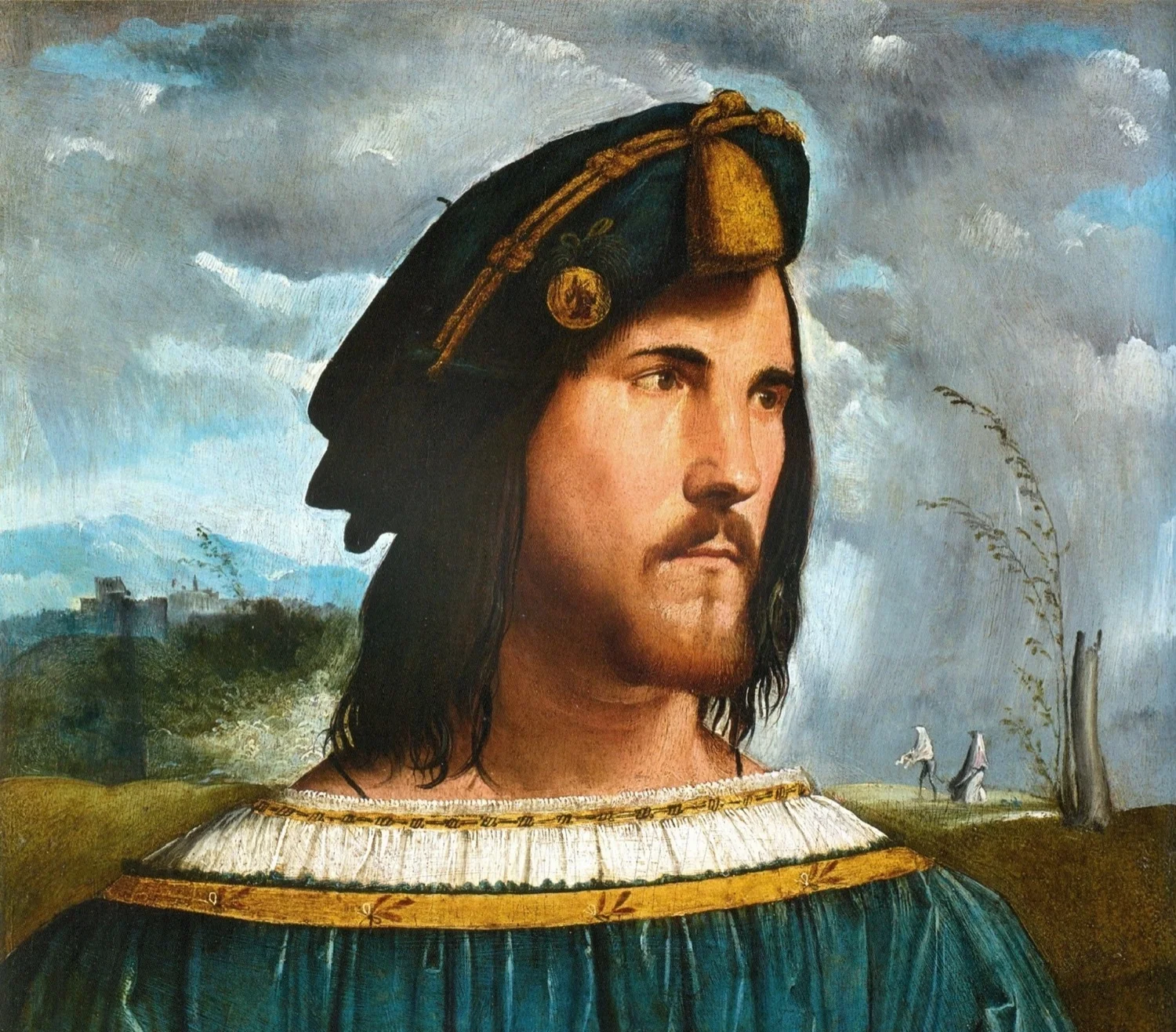
In essence, 'The Prince' deals with the methods employed by a prospective ruler in order to gain power and to maintain it. He drew on the historical past and his own experiences of Italy's and especially Forence's political plight. He was well placed to observe the shifting political alliances and maneuvering by clever and unscrupulous rulers. He admired the skill of Cesare Borgia in his attempt to gain power although he blamed him for maintaining Italy's political fracture. There were no morals in Machiavelli's political landscape. Right did not prevail over might and the wise and circumspect ruler should use any means within his power, to gain and maintain power. The successful ruler could/should not always be good  It was Machiavelli who coined the aphorism: 'It is better to be feared than loved if you cannot be both'. In 'The Prince', we see an able attempt to provide a scientific political synthesis to guide those who would rule.

As a digression, it appears that Machiavelli considered a 'belief' in state religion (take yer pick) essential, not because it was true, but because it provided social cohesion. The Popes of the day were not true believers of the Nazarene but were quite willing to bless the illiterate masses every Sundaytide.

So what are we to make of his musings? Today, Machiavelli is criticised and derided mostly by those who have not read 'The Prince' or are repelled and even incensed by its apparent cynical amorality. They commit the sin of hypocrisy and doubly so if they haven't bothered to read the tome. To the modern educated man, there isn't anything written there that should be shocking; anything can be shocking to the man who allows himself to be shocked. And indeed, there is nothing particularly profound in the book. It is the bold assertion of the tenets, and Machiavelli's attempt, at a synthesis that makes 'The Prince' interesting. There is nothing in the book that should be construed as novel. Julius Caesar knew all this as did Stalin and Churchill. Strangely enough, I would not extend this courtesy to Hitler.  Hitler understood the programme incompletely and let sentimental ideas of ideology prevent a thorough exposition of the tenets. Perhaps if Hitler had been truly Machiavellian he would have won the war. Machiavelli's originality lies in the written exposition of the relevant ideas in a complete and exacting form. Thoughtful leaders of men exhibit intellectual prudence if they can be bothered to read Macchiavelli. But if the experienced diplomat gains anything new it is a mark that he hasn't applied himself assiduously to his craft.

Clearly, there is nothing new under the sun and this is particularly true of the affairs of man. The human-animal is fundamentally selfish as shaped by evolution. The thoroughly decent and 'moral' ape ancestor didn't survive to pass on his mellow constitution and genes. Only the strong, adaptive, and ruthless gained offspring. We are the true (?and worthy) inheritors of biological 'frightfulness' which if we are honest, has shaped history.

Surely, geopolitical events and war in modern times, and I include the last hundred years or so as modern, highlight the 'Machiavellian' outlook and its relevance to any age. It is simply the case that more folk, these days, are aware of the 'rules'. There is a simple truism, that shouldn't be taken too far, that we are doomed to follow the errors of the past. Surely, we are wiser than folk of old, aren't we?


Of mankind we may say in general they are fickle, hypocritical, and greedy of gain.
 Niccolo Machiavelli


The image of "Jesus" is based on the likeness of Cesare Borgia ...
Meet the Prince


Wednesday, 1 July 2020

Gout


Today I’m going to consider, ‘The malady of kings’ or as it is more commonly known, gout. It needs to be said: I don’t have a personal stake in this condition. I have never suffered, but I know people who are so afflicted. However, I do suffer from an arthritic condition of both big toes with the quaint name: ‘Hallux Rigidus’. Tis a condition I have had since my early 20s. Effectively, my toes have become fused at the first joint causing pain on walking. Currently, I’m taking opiate pain killers to deaden the pain. In the future, I will need surgery to remove chunks of bone. Enough about me......

As far as we are aware, gout was first described by the Egyptians in 2640 BC. Gout was well known to the ancient Greeks. Hippocrates, the father of medicine, described the condition in the 5th BC as the ‘unwalkable disease’ and thought it was due to an imbalance of the humours. I suspect a sense of humour is absent once the sufferer is gripped in the grasp/rasp of an acute episode.

It was noted by Hippocrates, that gout was associated with the rich, or more importantly with rich living. A diet heavy in meat, delicate dainties, and wine were prophetic portends of the disease. The condition is caused by the deposition of uric acid crystals in the joint. The foot is so favoured due to the circulation in the extremities being less ‘efficient’ than elsewhere. The formation of crystals in the big toes results in severe pain during an acute attack. An acute episode may last up to several weeks and the pain has been described as ‘exquisite’. The pain is, apparently, extreme and likely to turn a sane man into a god. Indeed, the pain is so severe that any pressure on the toe, even by bedsheets, result in absolute agony. Thus the sufferer eschews footwear like a gypo eschews paying tax. Repeated attacks destroy the joint tissue causing frank arthritis. In addition, crystals may form in the kidney tubules. If untreated this can progress to kidney failure.

Uric acid is a breakdown metabolite of purines which play a key role in the formation of DNA. The precipitation of uric acid in the blood occurs when the concentration of the compound exceeds its solubility. As mentioned, it will deposit in parts of the body where the circulation is ‘sluggish’ and may affect other parts such as the hands and kidneys. High levels can be caused by the overproduction of uric acid, often exacerbated by a high dietary intake of uric acid and/or problems with excretion and removal from the body. It will come as no surprise that foods rich in uric acid include red meat, shellfish, and alcoholic beverages. As is often the case with metabolic disorders there may be an underlying genetic predisposition.

In unenlightened times gout was treated with a bizarre quota of remedies. The Romans favoured the application of dung from a female goat. Strangely, this remedy did not work and subjected the gout sufferer to a period of enforced loneliness, at least until the episode abated naturally. In the 16th century a German doctor advocated eating chopped up kitten. Again, this ‘treatment’ was ineffective for gout but it did prevent the patient from coughing up fur balls. In 6th century Byzantium, a physician named, Alexander Tralles (for it is he) treated gout by feeding the afflicted an extract from the autumn crocus. Apparently, the Greeks had been using this plant as a purgative for over a thousand years. But Tralles was the first physician to specifically treat gout with crocus. This treatment proved effective due to the active alkaloid present, colchicine. Indeed, until fairly recent times colchicine was the treatment of choice for gout. Recently, colchicine has been replaced with non-steroidal anti-inflammatories. These drugs are more effective and circumvent the acute toxicity inherent in colchicine treatment.

Gout predominantly affects men as women receive a degree of protection due to eostrogen. However, when women achieve menopause this immunity is lost. As previously noted, historically the condition was associated with the upper orders as the plebs were unlikely to be able to sustain an expensive diet rich in red meat. These days gout has become less fashionable with the wealthy and even the poorest prole can be so afflicted as long as he sticks to a diet of big cacs, copious amounts of ale, and buckets of whelks. The disease once the preserve of the gentry has become egalitarian and has slipped down the social scale to render the lower orders with an excuse to sign on the dole. How quaint.

Pain, scorned by yonder gout-ridden wretch, endured by yonder dyspeptic in the midst of his dainties, borne bravely by the girl in travail. Slight thou art, if I can bear thee, short thou art if I cannot bear thee!


Saturday, 27 June 2020

CHAZ without Dave


Seattle-area protest updates: No police reports filed about use of ...

An Experiment of Doom


Following the death of George Floyd socialist progressives and the left-wing media have gone on a metaphorical and actual rampage on the premise that 'Black Lives Riot, er I mean Matter'. What about other races? While it is true that the police kill more blacks than other races- er perhaps because blacks commit more violent crime than other folk. Mayhap if blacks stopped killing each other then the police would refrain from their contribution. It seems radical, I know.

Seatle has set up an autonomous region in the city with the tacit approval of the Mayor. This zone is free from authority of any kind. The police have withdrawn for now. It seems that the: Capital Hill Autonomous Zone (CHAS) is a self unregulated microcosm of anarchy.  The Mayor, Jenny Durkan, described the 'experiment' as a return to the 'Summer of Love'-what could go wrong?

It appears, that some of the occupiers, at least, have considered this action to be ongoing and long-lived and have seriously considered forming a form of governance based on a consensus without designated leaders. Considering how democracy has evolved, developed, and has been honed to imperfection over the past 2,500 years the declaration/designation of an experimental society from scratch is bound to form seamlessly without a stitch of a societal tear/tear. What could go wrong?  Apparently, hip hop artist, Raz Simone describes himself as the self-proclaimed de facto leader (warlord). Surely, this is totalitarianism, or did I miss the ballot?

There have been demands: Of course, that's how civilised society works. Criminals make demands and the elected officials put there by the democratic process, comply. So what are the demands: Let's start with the abolition of the police force and reallocating the funds to community health; banning the police of any offensive weapons including batons (I thought they were disbanded?). Mandatory retrials for blacks who are serving time for violent crime. Free public housing and free higher education. A refocus on Native American and Black History. What an interesting manifesto. The mandatory release of violent criminals plus a huge tax hike to pay for these 'progressive' reforms is going to promulgate and maintain stability in a modern society, Arse.

Logistics are important in war and peace and especially during a siege. If you destroy and exhaust supplies- wot ya gonna do? You could ask the surrounding and supporting populace to provide provender. So, what are the demands? I suggest a fatted calf or and a case of breaded products. Let's look at the actual demands.  It seems the residents of CHAZLAND are requesting tofu, soy-stuff, and vegan products. Methinks the warlord is going to do well here. Need I say more?

Apparently, during the day a carnival atmosphere dominates. But what happens after dark/darkies? Guess what? Folk start to burn stuff, loot and violence ensures. Businesses that haven't been destroyed are boarded up. Innocent folk and businesses caught up in the maelstrom have left. Every decent citizen has decided enough is enough and are relocating out of town. When all this done and the authorities decide to enforce the rule of law and civilisation what will be left? Let me guess: Destruction, graffiti, and lost businesses. Ultimately, the good burghers will be picking up the tab through taxation and higher taxation at that, because the tax base has diminished. The wankers who have destroyed the infrastructure will not be held to account as they will have fucked off to pastures new. 

Normally, I would suggest a radical burning and purging. But as a reformed arsonist, I'm not allowed to advocate such an activity by a mandate of law. Here is my revised solution. Cordone off the area and remove any decent folk that are left. Drop a low yield atomic bomb. Leave it to cool down and bulldoze the lot. Do you think my plan harsh?


Sunday, 21 June 2020

Freja's 1st Birthday


Chippus Blockus Maximus
Behold my granddaughter who turned one yesterday. She is a sheer delight for her doting grandfather as he descends into his dotage. But what of her future? Will it be bright? Frankly, I'm not sure. The world we inhabit has changed so much in the last 60 years. And while change is inevitable, certain changes are not necessarily for the better. I worry about her education and her ability to obtain a career that pays a salary that enables financial independence. I worry that she will be caught up and damaged by the insanity of liberal left-wing doctrine. I worry about her future......

I suspect I won't be around when she makes critical life-changing decisions as she reaches the fraught stage of early adulthood. I won't be there to offer wisdom, and other advice that she would probably ignore. Her mother, my daughter, will do her best, I'm sure. I fervently hope that when Freja's 35 she won't be living with parents as her mother does today.


Friday, 19 June 2020

Life is Rare, or Maybe Not

                             What We Don't Know About The Universe | Here & Now


I have to admit that until very recently, I believed that life in the universe and intelligent life, in particular, was likely to be commonplace. This is in alignment with most astrobiologists and cosmologists. This thinking is based on the fact that the number of stars in the observable universe is incredibly huge (1 billion trillion) and this only represents the universe we can see. We know that most stars have planets and so it seems reasonable that given the number of planets, there is going to be a large number of planets in the so-called 'Goldilocks Zone', that is, compatible with the formation of life. I've discussed this topic previously when I wrote about the Drake Equation (read it here). For the past 35 years or so the SETI program has been scouring the heavens in order to detect intelligent life. To date, there has been no evidence for the existence of 'Little Green Men' and so the search continues, given budget constraints.

But what about the counter possibility: We are unique and alone in the universe. This is a less popular stance amongst the experts but is certainly a viewpoint worthy of exploration and a view point that is becoming seriously considered by serious scientists. Mayhap, the chances that life can come into existence (abiogenesis) on a suitably primed planet is statistically highly improbable. There have been countless experiments over the last 70 years to reproduce the harsh conditions that occurred on the earth a billion years after it was formed. By applying heat and electrical energy to a 'soup' of inorganic chemicals it has been possible to produce organic compounds such as amino acids, which are essential for life. But so far the production of a self-replicating chemical compound has never been achieved- this would be the absolute minimum requirement for the fabrication of a proto-cell. Perhaps the conjunction of energy and chemicals in a particular/peculiar configuration necessary for the constitution of a replicon is exceedingly rare. We are primed by our intuition and our anthropic stance to extrapolate and conclude that life in the universe is inevitable. But what if we are exceedingly lucky?  What if the statistical probability of life occurring on a suitably primed planet is in the order of a sexdecillian to one  (1051).  Now, this is an exceedingly small number and on my part, completely arbitrary. And this brings me to an important point. We have absolutely no idea of the probability of life initiation on any planet including our own. It could range from virtually inevitable to almost impossible. For this statistic, we have no data at all. Of course, we can speculate, but if we are intellectually honest we must concede that our speculation is based on nowt.

At this stage of the proceedings, certain folk will envoke the 'God Principle'. I will not consider the multiple conceptual issues and logical problems with this principle and, at this stage, I'm happy to leave this irrational belief to educated religious apologetics and at the other extreme, the ill-educated.

As yet, I haven't considered the probability of the jump from the simple single cell to multi-cellular organisms. This would be a necessary step toward the evolution of intelligent life capable of producing sophisticated societies. Again, we have no data to account for this possibility.

In conclusion: We have to face the uncomfortable fact that when it comes to the probability of life formation we haven't a clue. This is a fact that many find very uncomfortable, scientists included. Others are untroubled by the 'unknown'. Indeed, it is a basic tenet of the scientific method that we start with a causal unknown and work through to the known (to be clear: an approximation of the known) by the acquisition of data. We must also appreciate the possibility that certain aspects of our reality may be totally closed to rational scrutiny. This might not be inevitable but it is certainly a prospect that is truly compatible with our reality.

As someone once said: "Two possibilities exist: either we are alone in the Universe or we are not. Both are equally terrifying."         


Watch a great man and weep.